Saturday, 14 January 2017

Empirical Searches for Nominative Determinism

Nominative determinism is the idea that a person's name influences their life or career. The Seven Dwarfs are an example, and humorous lists have been written about people with names that suit their vocation. The world's fastest man is named Bolt, there was a Russian hurdler named Stepanova, a meteorologist named Julie Freeze, and eugenics pioneer Eugen Fischer. Considerable attention is given to a urology paper by Weedon and Splatt.

To my knowledge, the idea is not taken too seriously. However, I was recently curious about the extent to which people have looked for evidence of nominative determinism. I went on Google Scholar and found some results which I'm sharing with you now.

Most analyses of nominative determinism focus on medical professions, looking at whether specialists tend to have names associated with their speciality.

Examples of nominative determinism in medical research, with statistics of N=1. Ref.
Although this study was not entirely serious, it had a number of methodological flaws as it failed to consider the prominence of each surname in the medical fields relative to its prominence in the population at large.

One recent study was by four members of a family surnamed Limb, all doctors (two of whom named C. Limb are avid climbers). They surveyed a directory of over 300,000 medical doctors grouped by speciality, and went through the list and independently noted which were suited to medicine in general and to their speciality. The lists were then merged by consensus. They found that 1 in 149 doctors had medically appropriate surnames, and 1 in 486 had names relevant to their field. They noted:

"Specialties that had the largest proportion of names specifically relevant to that specialty were those in which the English language has provided a wide range of alternative terms for the same anatomical parts (or functions thereof). Specifically, these were genitourinary medicine (eg Hardwick, Kinghorn, Woodcock, Bell) and urology (eg Burns, Cox, Dick, Koch, Cox, Balluch, Ball, Waterfall). Some terms for bodily functions have been included in the frequency counts but are not mentioned because they are colloquial terms that may lower the tone of this publication."
Another study looked at nominative determinism in patients rather than doctors, trying to see if surname influences health. Based in Ireland, the authors looked through the Dublin phone book to estimate the percentage of people surnamed Brady (0.36%), and then tried to ascertain what fraction of them had been diagnosed with bradychardia (slow heart rate). The only data they had available was for pacemaker implants, and found that 8 out of 999 pacemakers had gone to people  named Brady. Despite the small numbers, this was statistically significant (p=0.03) relative to Brady's prominence in the Dublin telephone directory. The authors don't speculate on the causes of this, but neglected to discuss the idea that doctors may be subtly biased towards diagnosing Bradys with bradycardia.

"This increased bradyphenomenon in Bradys could be attributable to increased levels of bradykinin"

In the analysis of particle physics experiments there is something called the "look elsewhere effect" where any significant effect has to be considered in light of all the other effects that are being looked for (this xkcd gives an example of the folly), which reduces the overall significance of the interesting part. I suspect that if they had looked at what other surnames were over-represented in bradycardia diagnosis, the significance of Brady would be diminished. I think this proviso should be applied to any search for nominative determinism: look at the boring names as well as the silly ones.

There are a few other studies out there, mostly tongue-in-cheek. These do go a step beyond compiling humourous lists, but not too much further.

Sunday, 4 December 2016

Strange Moments in Science: The Battle for the Planck Length

Many people use Wikipedia as a go-to source of information on a topic. People know that anyone can edit Wikipedia at any time, but generally trust that it is largely accurate and trustworthy because of the large number of vigilant volunteers and the policy of requiring sources for facts. A few years ago, I noticed that the article on the Planck length had some very detailed yet weird and incorrect information that was causing a lot of confusion among physics enthusiasts, and I decided to look into it.

This image taken from the Wikipedia commons and based on an xkcd.


I have written about the Planck length and its physical meaning on PhysicsForums. Besides being a "natural" unit, I stressed that the main significance of the Planck length is that it is approximately the order of magnitude at which quantum gravity becomes relevant, but that the idea that it makes up some sort of "space pixel" is a common misconception. There may be additional significance to it, but that wouldn't be part of established physics.

The Wikipedia page on the Planck length made the claim that a photon with a Planck length wavelength would collapse into a black hole. This is physically problematic (what does it even mean for a photon to collapse into a black hole?) in part because it violates Lorentz symmetry, because you could just observe the photon in a different reference frame and it would have a longer wavelength. Would the black hole "uncollapse" if you moved away from it? Is it only a black hole in some privileged reference frame. There was a large "proof" of this purported fact based on the Schwarzschild metric and the gravitational self-energy of a photon (which doesn't really make sense either because photons don't have a rest frame...nor are they uniform spheres). If you're using general relativity to contradict special relativity, you have done something wrong.

I thought this was strange, so I wanted to look at the source, which was a paper with a Russian title that in English meant "Comprehending the Universe." I did a search for it, and all that came up was the same Wikipedia page. The author of the referenced paper suspiciously had the same name as the person who had made the majority of the recent edits to the Wikipedia page. The reference is published by Lambert Academic Publishing, which is widely known to be a scammy vanity press that will publish your manuscript and then sell you a paper copy. They have recently been emailing me asking if I want them to publish my thesis. I was suspicious and perturbed, so I made a comment on the Wikipedia talk page mentioning that the reference couldn't be found. The author then posted a link to a page where it could be purchased for $60.

So basically, the situation was that there was this incorrect information being passed off on Wikipedia as "proven" physical truth, based on an article published in Russian in a vanity press and added to Wikipedia by the author. This was Bad, and it was misleading people, and I wanted to fix it. It can be quite difficult to actually change things on Wikipedia, because of the large number of policies that have to be followed and protectively zealous editors who will revert a lot of the changes they see. I figured if I just started removing the relevant material, it would quickly be undone by this guy who wanted his stuff on Wikipedia. So, I went to a friend who I knew to be a pretty serious Wikipedian, who goes by the nickname Oreo Priest.  I explained the situation to him, and he logged in to back me up. He pointed out on the talk page the various policies that were being violated (original research, reliable source, conflict of interest, etc) and gave me carte blanche to remove the offending material.

So, I went ahead and started removing it, and when the author protested, my friend and some other Wikipedians backed me up by citing official policies. The author's final argument was that his work was presented at the "5th International Conference on Gravitation and Astrophysics of Asian-Pacific Countries" in Moscow in 2001, and was therefore legit. Then, the final smackdown was laid:

The fact that you also presented your work at a conference doesn't change any of the above points, sorry. 
After that, the pollution stopped, although I haven't checked the guy's profile lately to see what he's up to. A large chunk of the article was removed, and hasn't been added back. However, there hasn't been a lot of improvement to the article since, so the "Theoretical Significance" section is a bit disjointed and sparse. It, and some of the other Planck unit articles, could use the attention of some quantum gravity researchers. Still, it's much better than the page on topological insulators. That page is terrible.

Tuesday, 29 November 2016

The Bremen Physics Catapult

In the town of Bremen in Northwest Germany there is a facility where researchers can launch their experimental apparatus by catapult. It is at a research facility called ZARM, the Center for Applied Space Technology and Microgravity (the acronym makes more sense in German).

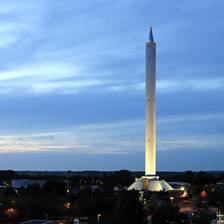
The tower in all its glory (from the ZARM website).

The main goal of this facility is to provide microgravity environments for physics experiments, on a scale more accessible than orbital space launch or parabolic aircraft. Besides answering the kinds of questions that keep us up at night, like how cats behave in zero gravity, microgravity is a useful method to control the effective gravitational field in an experiment. As Albert Einstein reminds us, true freefall is indistinguishable from inertial rest, and remaining static in a gravitational field is indistinguishable from uniform acceleration. If you want your experiment to take place in a truly inertial reference frame, dropping it down a tower is a simple way to achieve this.

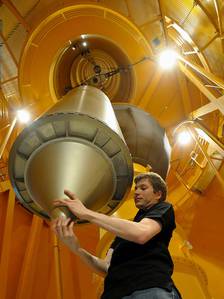
The entire experiment is built into a capsule like this, and then launched.

Initially, it was simply a drop facility: an experiment built into a modular capsule could be raised by an elevator and dropped from the top of the tower, falling 120 meters and experiencing four seconds of freefall. In 2004 the facility was modified to include a catapult launch with an initial speed of 168 km/h, giving it twice the freefall time but making the facility at least eight times as cool.

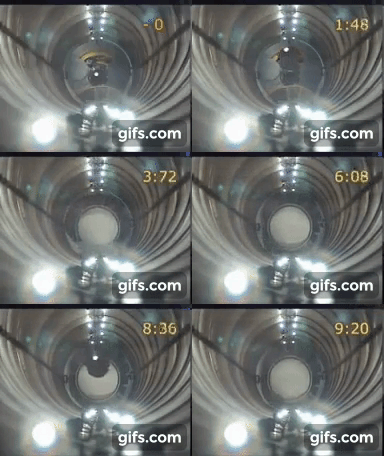
A gif of a lanch and landing, pillaged from this youtube video.

Based on a few videos of the facility, it appears that immediately after launch, a crash pad full of protective foam slides into place, protecting the experiment as it lands. Some of the videos are quite well done, check them out if you're interested.

Launch and landing.


I first became aware of this experiment when I read a paper (or possibly a news article) about launching a Bose-Einstein condensate in the catapult. In quantum mechanics class, we learn that a system whose wavefunction that is initially a Dirac delta will expand isotropically through time-evolution, becoming more spread out. Bose-Einstein condensates, functionally made of cold atoms in an electromagnetic trap, serve as a good experimental system for wavefunction dynamics because they are much larger than an individual particle while still behaving like one. However, none of those quantum mechanics homework problems included an anisotropic acceleration vector like we have on Earth's surface, and breaking the symmetry like that causes the condensate to expand differently than it would in true freefall. To measure this predicted isotropic expansion, the research group launched their experimental from a catapult. Because these Bose-Einstein condensates are so sensitive to acceleration, the group was proposing they could be used for accelerometers in spacecraft navigation systems. We will see if that actually happens.

The Bose-Einstein Projectile, from the Humboldt University group.

Not every experiment is as exotic, sometimes it's used to characterize apparati that will eventually be launched on satellites. Some experiments are testing the expansion of explosions in microgravity rather than atomic condensates, both for science's sake and also to gauge safety protocols aboard spacecraft. There are also some biological experiments, for example studying how fish orient themselves and turn in microgravity (I guess they couldn't get the approval to use cats), and others to test how plants perceive gravity (I feel like "how to plants know to grow up" can become a pretty complicated question. The projects are listed on the ZARM website, some in English and some in German.

My experiments typically take place in a little pocket of fluid on a piece of glass on top of a microscope on an optical table in a stationary lab. Compared to launching an experiment from a catapult, that seems rather mundane.

Thursday, 3 November 2016

DNA, topological ropelength, and minimal lattice knots

This post is about some diversions into knot theory, a branch of topology, that I took while contemplating my experiments. My job involves performing and analyzing experiments where I stretch out DNA molecules with knots in them. We study DNA because it serves as a good model polymer that's analogous to the much smaller polymer molecules that plastics and other modern materials are made of, and we study knots because we want to understand how entanglement affects polymer dynamics. There are also some genetic sequencing technologies for which we might want to add or remove knots, but right now I'm mainly just trying to figure out how polymer knots work. The theoretical side of the project (largely carried out by my colleague Vivek and Liang) involves running simulations of polymer chains with different kinds of knots, or simulating the formation of knots, and thinking about that is where I start to dip into knot theory.

A DNA molecule with two knots in it, from one of my experiments. The molecule is about 50 microns when stretched.


Mathematically, knots are only truly defined in loops, as a knot in an open string can just be slid off the end. Knots are loosely categorized by the minimum number of times the loop crosses over itself in a diagram (see below). The simplest knot, the trefoil, when drawn must cross itself a minimum of three times. For a given crossing number, there can be multiple kinds of knots. The two simplest knots, with three and four crossings, only have one type, then there are two for five, three for six, seven for seven, then it starts to explode:  165 for ten crossings, 9988 for thirteen, and over a million for sixteen. Beyond this, it is unknown how many kinds of knots there are (although there are constraints). Each type of knot has certain parameters that are unique to the  knot, called invariants, and calculating these invariants is how knots can be distinguished. When dealing with knots in real ropes and polymers and DNA, we have to remember that it doesn't count as a knot unless the ends are closed. If the ends are very far from the interesting knotty part we can just pretend this is the case without too much issue; in simulations of tightly bunched knots however there are various algorithms called "minimally interfering closure" that make knots in open strings topologically kosher.

Knots with up to seven crossings.
The typical model of a polymer is that of a self-avoiding walk, which I've talked about in the past. When the walk is forced to have closed ends, it represents a topologically circular molecule, and can be thought of as a self avoiding polygon (even though polygons are typically imagined in two dimensions). These self-avoiding polygons can take the form of different types of knots, and in fact it can be shown that as a self-avoiding walk becomes longer and longer, the probability of having a knot in it approaches 100%. A number of computational papers have shown that knotted ring polymers have a size (quantified by the radius of gyration, the standard deviation of the location of each monomer in the chain) which is smaller than an unknotted chain of the same length.  This makes intuitive sense, there are topological constraints which prevent the chain from adopting a widespread conformation.

The chains in these simulations tend to be quite "loose," and I was curious about the scaling of tight or  "ideal" knots, which are knots that have the minimum possible length-to-diameter ratio. Each type of knot has a parameter called the ropelength, which is the minimum length required to make a knot of unit diameter. The ropelength can be a difficult quantity to calculate, and one group has written a few papers just slightly hammering down the ropelength of the simplest knot, bringing it from 16.38 in 2001 to 16.37 in 2014.


These knots are "ideal" meaning they have the smallest possible length-diameter ratio.

The ropelength comes up in my research in part because of a theory from Grosberg and Rabin, who derived the free energy of a knot in a polymer. The free energy arises from the fact that the length of polymer in the knot is confined, reducing entropy, and bent, increasing energy. They argued that the energy of a given knot type is minimized at a certain length, and such a knotted conformation constitutes a metastable local minimum in the free energy (compared to the unknotted global minimum) that implies that an open knotted polymer wouldn't spontaneously unknot itself, but instead would unknot through a slower diffusion process when the knot reaches one end. One of the terms in the Grosberg-Rabin is the excess knot contour, which is the length of polymer in the knot minus the ropelength, and thus it is necessary to know the ropelength to calculate the metastable knot energy. Another paper argued that metastable knots don't exist, and that is one of the things I'm trying to figure out with my knotted DNA experiments.

The most topologically accurate DNA knot experiment comes from Robert Bao, Heun Jin Lee, and Stephen Quake in 2003, where knots of known topology were tied in individual DNA molecules using optical tweezers. I get the impression that Bao developed the expertise to do this, wrote his paper, and made the sanity-promoting decision never to do it again. In their paper, they measured the amount of DNA in different kinds of knots and the diffusion of the knots along the molecule, and used this to ascertain how much intramolecular friction was occurring within the knot.  Grosberg and Rabin claimed to have postdicted Bao et al.'s findings with their model. In my experiments, unfortunately, the knots are much more complicated and I don't know what kind they are.


In my experiments, I'm interested in figuring out what kind of knots I'm looking at, and one way to do that is to estimate the amount of DNA in the knot and backstrapolating to figure out the number of essential crossings. To aid in this endeavor, I looked up the known ropelength of knots up to 11 crossings, which was not super-easy nor super-difficult to find. I don't think anyone has analyzed this specific relationship before, but not too surprisingly, with more crossings you tend to have a longer knot, although there is overlap between knots with adjacent or superadjacent crossing number. This relationship fits well with either a linear or square-root function (the best-fit power is 0.8...not sure that's meaningful but I love power-law fits). Once you get past 11 crossings there are problems because A. nobody has bothered calculating this for 12-crossing knots (of which there are 2176) and B. the mean isn't a useful parameter anymore because there are two populations: alternating and non-alternating knots, which have their own behaviours. Complex knots often have more in common with other knots of a certain class (e.g. twist, torus knots) than with the same crossing number.


More complex knots require more rope to tie.
My idea was to use this trend to figure out or constrain the topology in my experiments. For example, if my knot has 2 microns of DNA in it, I can figure out (hypothetically) that it must have at most 30 crossings based on extrapolating the ropelength curve or Bao's data, or something like that. I still haven't solved the topology-constraining problem. However, looking into the ropelength scaling got me interested in other aspects of maximally tight knots, even though maximally tight knots don't really occur in my experiments.

In addition to the lengths of ideal knots, I was interested in their size in general, which for a polymer is typically quantified by the radius of gyration, and a lot of polymer physics looks at the scaling of the radius of gyration with length. It's established that loose floppy knots grow more slowly than loose floppy rings, but what about tight knots? It turns out, the radii of gyration for ideal knots hasn't been calculated (at least not to my knowledge), so to examine this I'd have to generate the knots based on tables of 100 Fourier coefficients and then discretize and measure them. Instead I opted to look at a less-ideal system, minimal knots on cubic lattices. These were tabulated by Andrew Rechnitzer for a paper on the topic, and exist for knots up to 10 crossings (for which there are 165). These are useful for doing simulations of knotted polymers because they allow the initialization of complex knots, and the lack of tabulation for more complex knots makes them difficult to systematically simulate.

A minimal 10-crossing knot on a cubic lattice.
These are the knots whose coordinates on a cubic lattice have the least number of points, but they are still longer than ideal knots. How much longer? The length of each minimal lattice knot (which I call the cubelength) is roughly 40% greater than the equivalent ideal knot, decreasing slightly as a function of crossing number. This makes handwaving sense, because you have an extra factor of square root of two if you go across a diagonal instead of taking two steps. We can see all the different knots (from 3 to 10 crossings) in the graph below; notice there is overlap between the largest 7-crossing knots and the smallest 10-crossing knots. I had a hypothesis that these tight knotted lattice polygons would be more compact in their scaling (the radius of gyration would increase with a weaker power of length) than regular compact lattice walks, and went to examine it.
Every minimal lattice knot up to 10 crossings (except one of the 10-knots...I only ended up with 164 for some reason).

The size of a random walk grows with the square root or 0.5 power of its length. The size of a self-avoiding walk grows faster, with roughly the 0.6 power, for reasons I explain here. A compact globule (the form a polymer takes when it collapses) which grows by wrapping around itself, will grow with a volume proportional to its length, so its radius is expected to grow with the 0.33 power of its length. What do we see when we look at lattice knots? The ensemble of compact lattice knots grows at the 0.33+-0.02 power, entirely consistent with a compact globule.

Left: Average izes of minimal cubic lattice knots as a function of the crossing number. Right, same as a function of their length. I intuitively guessed the function Rg=(L/6)$^{1/3}$ and it fit the data really well.
Nothing too exciting there, but another question one could ask is whether minimal knots grow faster or slower than random self-attracted walks of comparable length, as polymers scale differently as they grow, before they reach the asymptotic limit. To figure this out, I generated self-avoiding random walks on a cubic lattice up to length 60, biasing the steps they take (with a Metropolis method) to have a strong preference for being next to non-adjacent occupied sites. Even with very strong self-attraction (well past the theta-point in polymer language), the scaling was 0.36, and not 0.33, but looking at a graph there is not a noticeable difference between the scaling of knots and tight lattice walks.


So, what's the moral of this story? A tangent from my research into DNA knots lead me to look into some of the scaling properties of ideal and minimal cubic lattice knots. I didn't find anything too profound: more complex ideal knots are bigger, and minimal cubic knots grow like the compact globules they are. It was a fun little investigation that I don't think anyone had bothered doing before. I didn't find anything interesting enough to publish, so I thought I'd share it here.

Sunday, 30 October 2016

Media appearance: Discover Magazine

An article about my work on falling through the Earth was published in this month's edition of Discover Magazine. The article, based on some phone interviews I did with them, can be found here. Unfortunately you will need a subscription to read it, and because they were nice enough to write this article I'm not going to blatantly infringe their copyright and post a scanned version here. Enjoy, if you can.

Saturday, 22 October 2016

Visit to the Alcator C-Mod Fusion Reactor at MIT

I recently became aware that MIT had an experimental fusion reactor on campus, so I decided to check it out. After a few back-and-forth emails, I ended up joining a tour that was being given to the Tuft's energy club (yes, Tufts) on Friday afternoon.


MIT's tokamak research began as an offshoot of its magnet research lab (where MRI was developed), that eventually became so large as to spawn a new center and envelop its host. Alcator is an elision of Alto Campo Toro (high field torus), and this is the third iteration of it. It was recently in the news because they had achieved a fusion reaction at a comparatively high pressure, immediately before it was shut off because the US government diverted all fusion research funds to ITER.

The tour began in the lecture room with an overview of the why's and what's of fusion. In discussing the when, the speaker showed the improvement towards the break-even point in fusion reactors over the past several decades, but said that because the tokamaks had gotten so much bigger, they timescale of the experiments had slowed down considerably and now they have to wait several decades for ITER to be ready before their next big learning experience. I talked more about the timeline to fusion here; it's a bit more pessimistic.

"Why use fusion to give plants energy to make sugar and then bury them for millions of years until they form fuel and burn the fuel to make electricity, when we can just use fusion to make electricity?"


Another amusing tidbit the speaker mentioned is that more money has been spent in recent years making movies about fusion (e.g. The Dark Knight Rises, Spiderman 2, etc) than on fusion research itself. He was also overjoyed when someone asked why tokamaks were shaped like donuts and not spheres and he got to cite the hairy ball theorem.

After the speech we went across the street to the facility. There was a big control room where a few people were watching a video and looking at data from the last experiment. There was also a neat demonstration where a plasma was established by running a high voltage across a mostly-evacuated tube, and then a magnetic field was activated that visibly pinched the plasma.


We then entered the room with the tokamak. Most of the room, however, was full of electrical equipment. One of the neatest things I learned was about the way the thing is actually powered. It requires very powerful short lived surges of electricity to power the magnetic coils, on the order of 200 megawatts. To achieve this, they integrate power from the grid and store it in a massive rotating flywheel. The infrastructure for transforming the grid electricity is actually much bigger than the tokamak and its other supporting infrastructure. I was informed that the flywheel is bigger than the tokamak and its shielding, but I wasn't allowed to see it. It is apparently 75 tons and spins up to 1800 RPM, storing 2 gigajoules of kinetic energy.

The flywheel at the Joint European Torus, bigger than Alcator's.

On the wall outside the reactor room was the floor plate from a previous version. It was large.

The tokamak itself is big enough for a person to crouch in, and is surrounded by the wires that generate the magnetic field, and a lot of shielding. The whole thing is about the size of four elephants. It is painted light blue on the outside. On top there is a tank of liquid nitrogen that they use to cool down the copper wires after each heating pulse (which lasts about two seconds). People took photos and asked our tour guide some questions.

Here I am with the reactor (light blue tank thing behind me). You can see the tank of liquid nitrogen on top. The black pipe behind me is the power supply cable for the magnets. Not sure what the cheese grater thingy is.

Afterwards in the lobby there were a few artefacts we could play with, including some of the copper wires used for the field and the superconductors that are replacing them, and some tungsten shielding plates that were visibly damaged from years of hot plasma abuse.

W
Overall, I didn't learn much that I didn't already know about fusion (except the flywheel!) but I'd beat myself up if I knew I worked down the street from a fusion reactor and never went to see it. I appreciate the Plasma Science and Fusion Center guys for putting on the tour, and the Tufts club for (perhaps unknowingly?) letting me crash their event.  Also, one of the safety signs had a typo.


Monday, 10 October 2016

The Nested Logarithm Constants

Depending on your philosophical interpretation of mathematics, I have either discovered or invented a new number: the Nested Logarithm Constant.

$\alpha$=log(1+log(2+log(3+log(4+log(5+....)))))=0.820359862208789788....

As is natural, the logarithms are base-e. I first calculated this number while reading about the nested radical constant, and I wanted to see if something similar existed for logarithms...and it did! While I cannot be certain that others have not examined this number previously, googling the first few digits only yields random lists of digits. I have entered its decimal expansion into the Online Encyclopedia of Integer Sequences, the closest thing that exists to a Wiki of mildly interesting numbers.

It converges quite rapidly with respect to the final digit, being effectively exact after about 5. The plot below shows the convergence with respect to the final digit, and the fractional deviation from the asymptotic value, with an exponential decay shown for comparison.

While it seems obvious empirically that this converges, it is not proven [by me, see update below]. As far as I can tell, a proof of the convergence of the nested radical constant is also lacking. I would suspect that the nested logarithm constant is both irrational and transcendental, and there is a short proof that the logs of integers are irrational, but I'm not aware of a proof that nested logarithms are irrational.

There are a few extensions one can examine. Changing the base of the logarithm changes the value of the final number, decreasing with increasing base towards zero, and towards infinity with decreasing base.

Another extension is to include an exponent on the integers, such that the number becomes:

$\alpha_{N}=\log(1+\log(2^{N}+\log(3^{N}+...)))$

When N is large, 2$^N$ will be much larger than log(3$^N$+...), so we can take the N out of the exponent and see that $\alpha_{N}$ approaches log(1+N·log(2)) ≈ log(N)+log(log(2)). The difference between $\alpha_{N}$ and its large-N approximation decreases inversely with N, with a prefactor empirically* very close to the square root of two. With this reciprocal correction, I can almost write down a closed form expression for $\alpha_{N}$, except it starts to diverge close to N=1, and I don't know if it's a coincidence or not (where does the square root come from?). I would be interested in exploring this further to try to find a closed form expression for the 0.82...constant.

The nested logarithm constants as a function of the exponent, and the deviation of two approximations.
There is one more related number of interest. I can calculate log(1+2·log(1+3·log(1+4·log...)))) which converges to roughly 1.663.... I have not investigated this in as much detail, but it is empirically very close to the Somos Quadratic Recurrence Constant, which can be calculated as √(1√(2√(3√(4...)))) and converges to 1.662. Unless I'm lead to believe otherwise I will assume that this is a coincidence.

This investigation started with me playing around with logarithms and seeing what came out, and lead to a few findings that I think are kind of interesting. Maybe when I have the time and energy I'll investigate this further and be able to determine if the nested logarithm constant has an exact value. There is a journal called Experimental Mathematics, which is basically what this is, so perhaps I can send it there.

UPDATE: A commenter on reddit, SpeakKindly, has put forward a simple proof of convergence by establishing an upper bound using induction. I will repeat it here for the readers:

First, consider the related term log(a+log(a+1+log(a+2+log...(log(a+k)))) for some k and a>1. SpeakKindly proved this is less than a for all k. The base case, for k=0, we have no nested terms and just have log(a), which is less than a. Then we assume this is true for k-1 nestings, so we have log(a+log(a+1+log(a+2+log...(log(a+k)))) < log(a+(a+1))=log(2a+1), which is always less than a. The nested logarithm constant is the log(1+(the above term for a=2)), which is less than log(1+2), thus the nested logarithm constant is less than log(3).

Another user, babeltoothe, used a different argument using the integral definition of the logarithm, where the upper limit of each integral was another integral.

*Best power-law fit is 1.004√2 for the prefactor and -0.998 for the exponent.